Just how hard is Nedbank Gravel Burn actually? – The Paradox of the Burn
The dust hadn’t yet settled at Shamwari Private Game Reserve, the air thick and electric, vibrating with the manic energy of human effort and achievement. Behind the finish line, the media teams swarmed around the Pro category podiums, champagne corks popping.
In the background, just away from the frenzy, Stephen Salt crossed the line. He slowed to a halt, unclipped, and gave a single, subtle fist to the air. To himself. No theatrics. No glory salute. At 74, the Englishman has completed countless challenging off-road stage races. After 7 days of immersion into Karoo culture, camping under the bright starry skies with the shared camaraderie, that quiet personal celebration moment was purely about the endeavour. The gesture really meant something, like “I’ve still got it.”
“Just how hard is Nedbank Gravel Burn?” is what we are often asked by riders who are contemplating this weeklong 750km gravel challenge. “It depends” seems blythe and slightly dismissive. A more helpful response is to ask another question: “What should we compare it to? Other events?” Well, there is nothing quite like this. Mountain bike and road stage races present a more complex set of challenges, including technical trails and bunch riding skills, which are often pivotal to the experience and to success.

Sure, the Nedbank Gravel Burn course itself presents challenges: the distance, highly varied surfaces, long climbs – one of which compares to a first-category climb in a Grand Tour – yet all are surmountable by riders with a broad range of ability. In the build up, they need to put in a fair amount of preparation. During race week earning a medal depends on having the right approach: pacing, restraint, knowing how and when to spend energy, when to eat and how to recover. It’s about how a rider puts it all together. That aspect is so often overlooked.

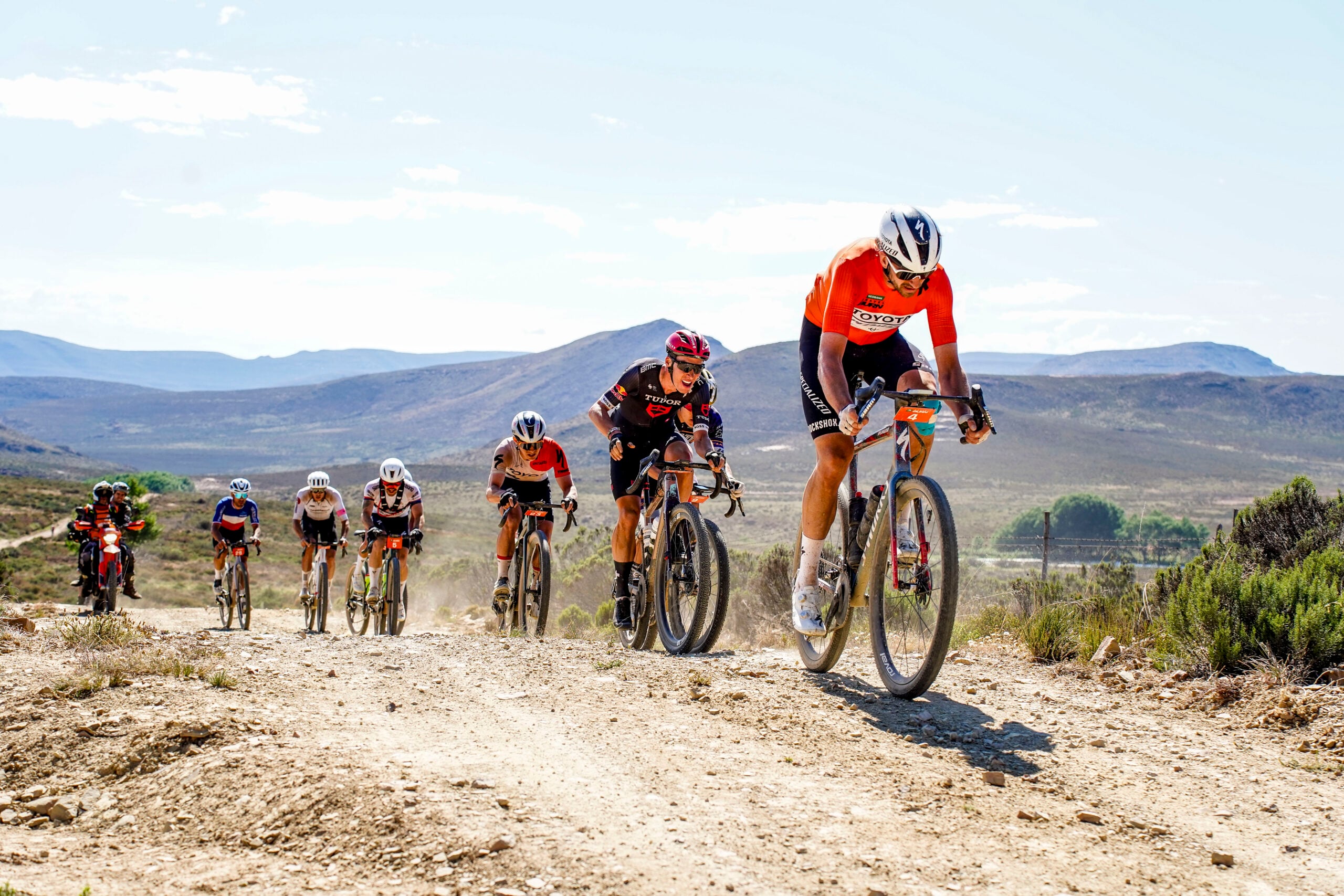
However, if you’re racing, that is a different matter altogether. Pro Women winner Axelle Dubau-Prevot left it all out on the gravel roads, resulting in having the honour of winning the inaugural race. Simon Pellaud did the same, getting within a handful of seconds from the overall GC lead, but it just wasn’t enough to topple eventual winner Matt Beers. For Stephen, it was about testing his personal limits, just as it is for the top tier professionals. It’s like a Rorschach test for a rider’s own threshold of suffering.

The Physics
If you look at the raw spec sheet – seven days, traversing the Karoo into the Eastern Cape – the decision to enter feels weighty. It looks like a beast. But the reality of the race profile offers that nuanced dichotomy.
At the sharp end of the field, racing at the front end of the field can be brutal, make no mistake. It’s a mix of pure firepower and tactical nous in a war of attrition on every steep rise and each sketchy descent. Science and strategy meets instinct and reactivity.

But it’s surprisingly manageable at your own pace. For the rest of the field – the “mid-pack” to the “back-of-the-pack” – W/kg, drag coefficients and racecraft don’t mean as much. What counts here is another set of contrasts: passing the km-to-go boards while gazing at the endless horizons, the feeling of solitude and the glow of the camaraderie. The maths shifts out here.
In numbers, the average rider in the 2025 edition completed the seven stages in around 25 hours. Mountain bike stage races of similar length and stature could well take the same rider 30% longer. This translates to manageable stages, finishing with enough daylight left to recover and then, importantly, to enjoy the evening.

The Recovery Algorithm
The 2026 edition aims to optimise the “recovery algorithm” by introducing two-night stays at three of the Burn Camps. This is a critical logistical tweak. It eliminates the daily fatigue of packing up kit bags and moving tents. It allows the body to settle into a rhythm.
Amateur rider Luke Lockhart-Ross provided the most accurate data point on this physical toll after the inaugural race:
“I expected to be completely broken every night. I wasn’t. I was tired, but I could eat, enjoy the afternoons, sleep comfortably and wake up feeling ready to do it again.”
This is the “inner story” of the Burn. It is not a death march. It is a fatigue management exercise.

The Individual Rider Experience
Some riders push from the opening kilometer, treating every challenge on the route as an opportunity to gain time on their rivals. Others ride conservatively, building into the week, soaking up the Great Karoo – some of the most unique and starkly beautiful scenery on the planet. Both approaches are totally justifiable and there’s one common thread – it’s all up to the rider.

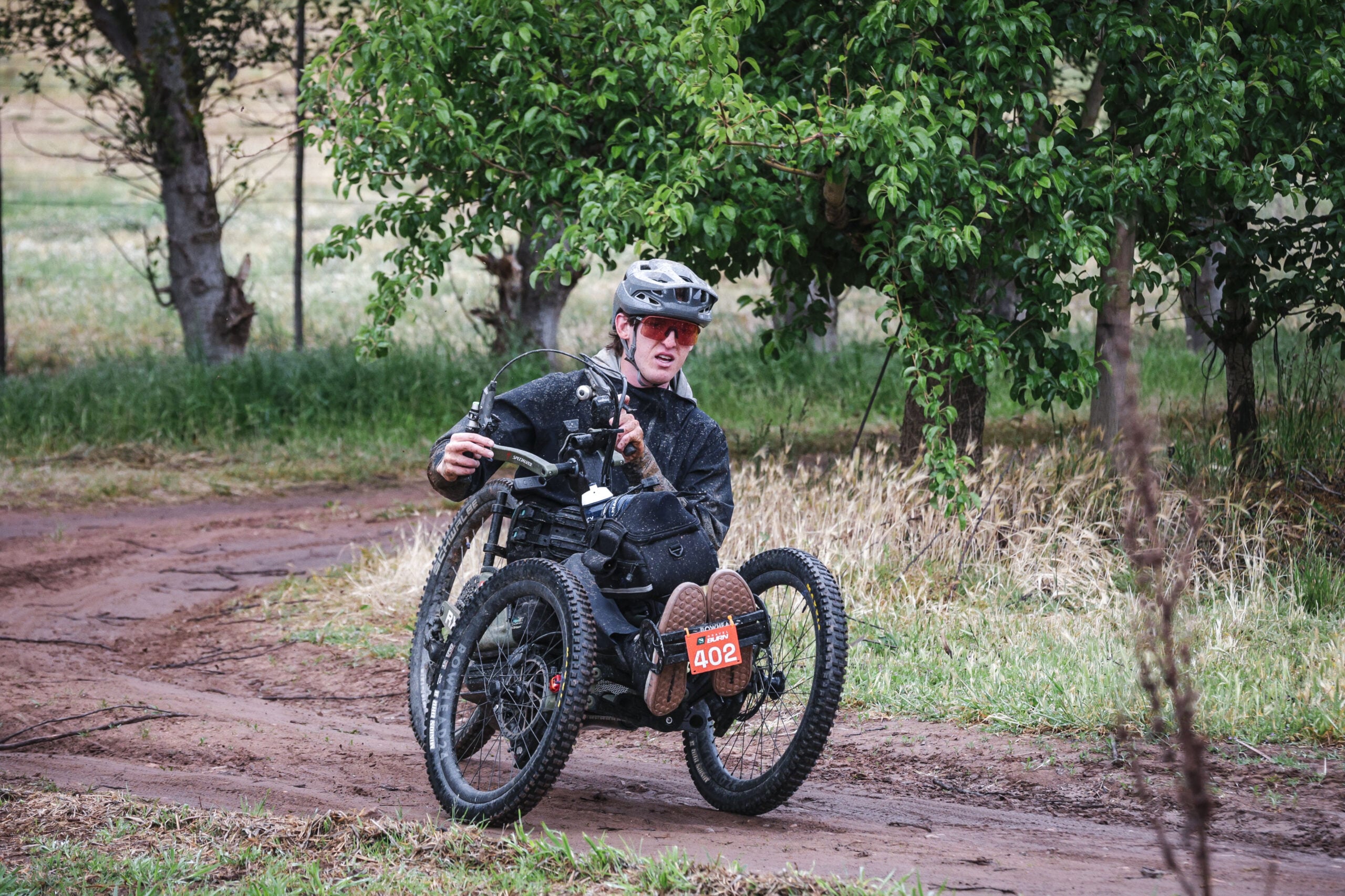
Another constant is the camaraderie. From 19 to 74, Pro or enthusiast, riders share the same roads, wash the same dust off themselves and sit at the same dinner table. All finish the day in the same condition: tired, dusty, hungry and surrounded by people who know exactly what “Type 2 Fun” feels like.
The Decision
You do not need complete physical certainty to belong on the start line. You don’t need to be a genetic outlier. You need preparation, honesty about your limits and a willingness to commit.
Nedbank Gravel Burn 2026 is a demanding, immersive experience, and it rewards those who approach it with care. It is a hard race to win (in any category), yet an incredibly rewarding race to simply be in.
For many, the hardest metric to overcome isn’t the elevation gain or the distance.
It is deciding to say yes.